Xsight Labs Just Raised $300 Million to Make Network Chips Programmable — Here’s Why That Matters
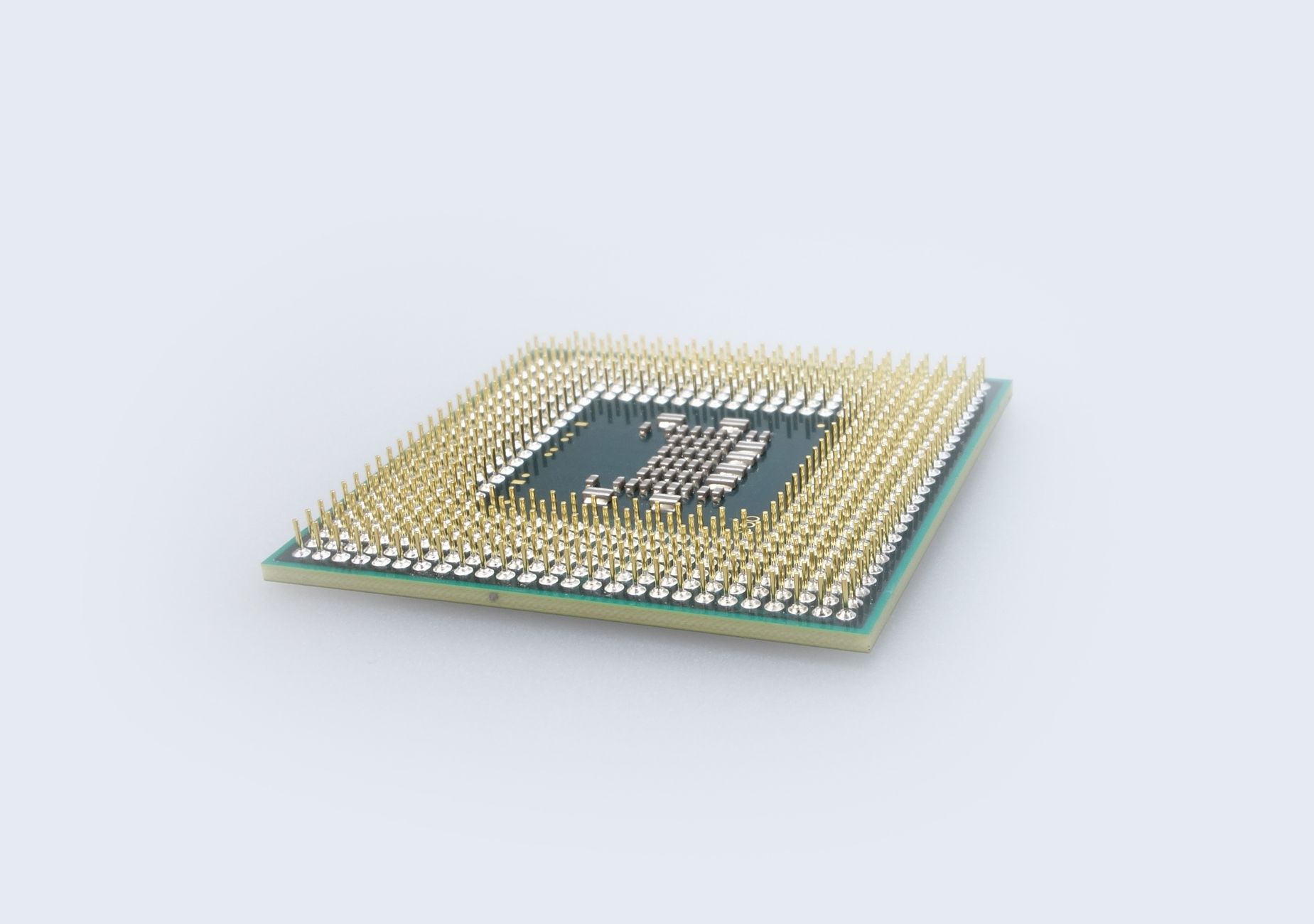
The networking chip space has been stuck in a rut for years. You get fixed-function ASICs that move packets fast but can’t adapt, or you get general-purpose CPUs that adapt but melt your power budget. Xsight Labs thinks there’s a third way, and they just convinced investors to back it with $300 million in fresh capital. That’s not a typo. Three hundred million dollars for a startup making programmable network silicon. The round was led by BlackRock and includes participation from NVIDIA, Cisco Investments, and a handful of strategic LPs who usually only write checks this size for companies already shipping product. Xsight isn’t there yet. They’re still in pre-silicon validation. That tells you everything about how desperate the market has become for something that breaks the current trade-off curve.

The Problem Nobody Wants to Admit
Every hyperscaler runs the same playbook: buy merchant silicon from Broadcom or Marvell, glue it to a switch ASIC, and pray the roadmap doesn’t shift. If you need a new encapsulation format, a custom telemetry header, or a per-flow policy that didn’t exist when the chip taped out — you wait two years for the next spin. Or you offload to a SmartNIC and eat the latency penalty of crossing the PCIe boundary. The industry has papered over this with P4, eBPF, and DPDK, but those are software band-aids on a hardware fracture. Xsight’s bet is that you can put a genuine programmable data plane — think hundreds of RISC-V cores with custom instruction extensions for match-action tables — inside the same power envelope as a fixed-function parser. If they’re right, the entire “programmable network” conversation shifts from “how do I hack around this ASIC” to “what do I want the packet processor to do next week.”
What $300M Actually Buys
Let’s be honest about what this money is for. Tape-out on a 5nm or 3nm network processor with serious SerDes, HBM interfaces, and a custom core cluster runs $80-120M for first silicon. Mask sets, bring-up, validation, and a second spin push that past $200M. The rest covers a go-to-market team that can actually sell to Google, Meta, and Microsoft — not just the usual suspect tier-2 cloud builders. NVIDIA’s participation is the tell. They don’t invest in networking chip companies for fun. They invest when they see a path to offloading infrastructure overhead from their GPUs. If Xsight can build a chip that terminates RoCE, handles congestion control, and does inline encryption without burning CPU cycles on the host, that’s a direct line item on NVIDIA’s BOM for next-gen HGX platforms. Cisco’s check is simpler: they need a story for Silicon One that isn’t “we bought another ASIC vendor.”
The Architecture Gamble
Xsight hasn’t published a block diagram, but the hiring pattern tells the story. They’ve pulled lead architects from Barefoot Networks, Innovium, and the old Fulcrum team at Intel. That’s a crew that knows how to build high-radix match-action pipelines that don’t fall over at 512B packets. The programmable piece almost certainly leans on a clustered RISC-V array with vector extensions for header processing — think 128-bit wide SIMD lanes that can parse, edit, and encapsulate in a single cycle. The risk isn’t the ISA. It’s the memory system. Programmable data planes live or die by how fast they can fetch/modify/write packet metadata without stalling the pipeline. If Xsight solved the SRAM banking problem at line rate, they’ve done something the big merchant vendors have skipped for three process nodes. If they haven’t, this is just another expensive science project.
Why Now
Three forces converged. First, the hyperscalers stopped buying “good enough” merchant silicon. Google’s Jupiter, Microsoft’s Olympus, Meta’s Minipack — they’re all custom or semi-custom now. The volume shifted away from the Broadcom/Marvell duopoly, and that opened a wedge for a new merchant player who offers programmability as the differentiator. Second, AI workloads changed the traffic shape. All-to-all collectives, parameter server fan-out, and RDMA over Converged Ethernet mean the network now does compute-adjacent work. Fixed-function parsers can’t express “reduce-scatter” semantics. Third, the CHIPS Act money started flowing. Xsight’s fab partner is almost certainly Intel Foundry Services on 18A or TSMC N3E with DoD-backed subsidies. That de-risks the capital intensity for VCs who otherwise wouldn’t touch a pre-revenue fabless silicon play.
The Real Competition
It’s not Broadcom. It’s not Marvell. It’s the internal teams at the hyperscalers themselves. If Xsight ships a 51.2Tbps programmable chip in 2026, Google’s Jupiter 3 team will look at it and ask: “Why aren’t we just taping out our own version with our own ISA extensions?” The answer has to be time-to-market and ecosystem. Xsight needs a P4 compiler that doesn’t suck, a Linux kernel subsystem that mainlines cleanly, and a telemetry stack that plugs into existing observability pipelines. They need the boring stuff that makes a chip feel like infrastructure instead of a science fair project. The $300M gives them runway to build that. Whether they have the product discipline to ship it is the only question that matters.
What I’d Watch
First silicon return. That’s the milestone. Not the Series C announcement, not the partnership press releases. When the first die comes back from the fab and they run line-rate traffic through a programmable pipeline without melting the package — that’s the signal. Everything before that is narrative. Everything after is execution. If you’re a network architect at a cloud builder, put a placeholder in your 2027 architecture review for “merchant programmable NIC.” If Xsight hits, it changes your BOM. If they miss, you just keep doing what you’re doing. Either way, the fact that smart money bet $300M on this category tells you the fixed-function era is ending. The only variable is who delivers the replacement first.
Source: original report