Google’s Air-Cooled Data Center in Virginia Signals a Shift the Industry Can’t Ignore
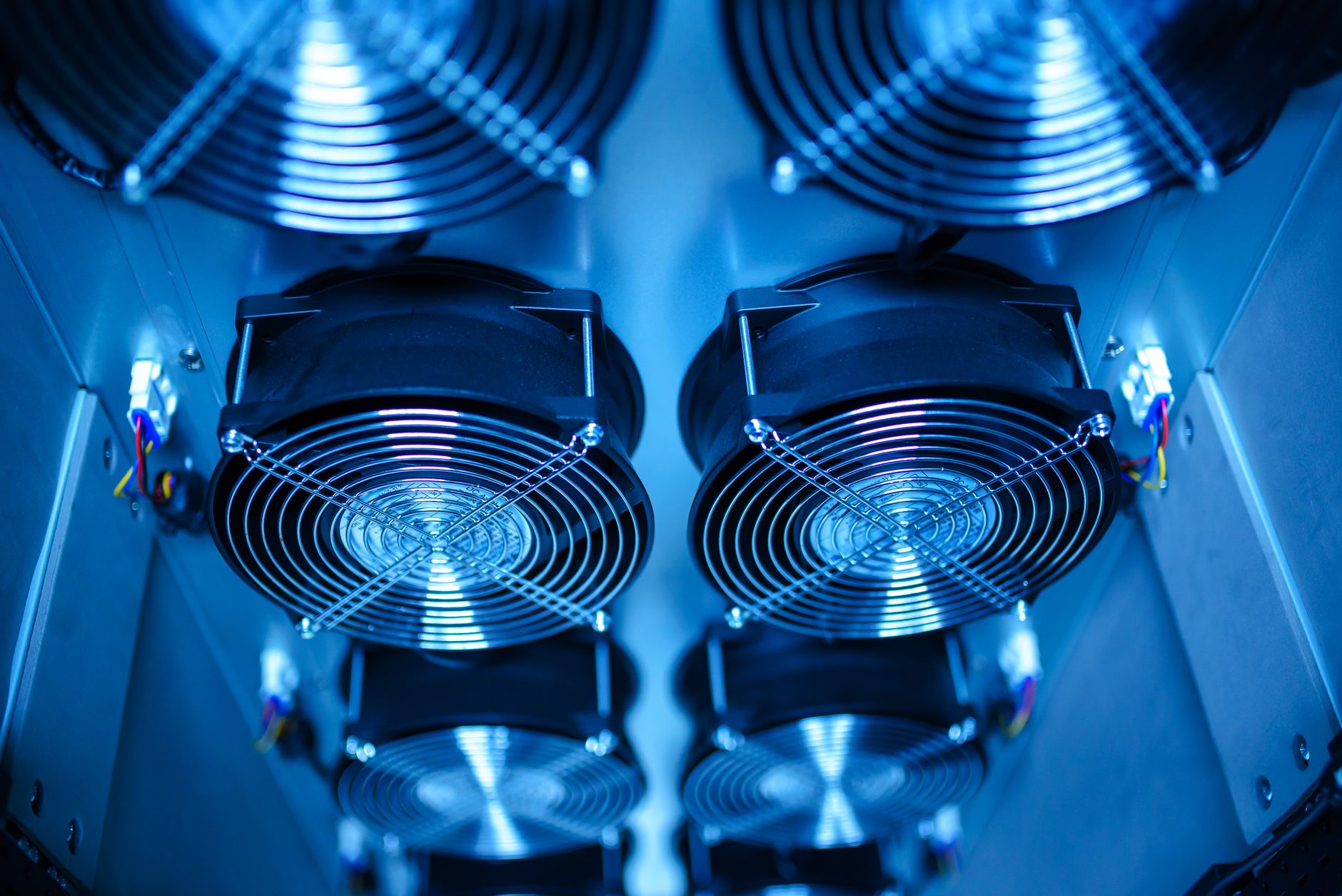
Google’s announcement that its first data center at Botetourt Center will rely on air-cooling technology isn’t just a footnote in a press release — it’s a signal flare for an industry drowning in water bills and sustainability pledges it can’t keep. For years, the hyperscale players have treated evaporative cooling as the only way to tame the heat thrown off by thousands of GPUs crunching AI workloads. That era is ending, and the operators who cling to it will bleed money and credibility.

Why Air Cooling Actually Matters Now
Traditional data centers suck up millions of gallons of water annually. A single 50-megawatt campus can evaporate 300 million gallons a year — enough to supply a small city. In drought-prone regions like Arizona, Utah, and increasingly Virginia, that’s not just bad optics; it’s a regulatory time bomb. Municipalities are already denying water permits to new builds. Google’s move to air-cooled chillers at Botetourt sidesteps the fight entirely. No evaporation ponds, no chemical treatment trains, no negotiating with the local water authority every summer.
The trade-off has always been energy. Air-cooled systems run less efficiently on the hottest days, pushing PUE (Power Usage Effectiveness) higher. But two things changed. First, modern chillers with variable-speed fans and adiabatic assist narrow that gap to low single digits. Second, the grid is greening fast — Virginia’s Dominion Energy hit 15% renewable last year and has a legislative mandate for 100% carbon-free by 2045. Burning a few extra kilowatts of clean electrons beats draining the James River every time.
The AI Workload Twist
Here’s where it gets spicy. AI clusters run hotter and denser than traditional cloud workloads. Nvidia’s HGX platform pushes 100 kW per rack; liquid cooling is the default assumption. Google’s bet on air suggests they’ve either cracked high-density air containment — think rear-door heat exchangers with 45°C supply air — or they’re segregating workloads. The latter is more likely: inference pods and training clusters get liquid loops; everything else — storage, networking, control plane — rides the air-cooled bulk. That hybrid model is the template every colocation provider should be copying right now.
Microsoft’s Quincy campus still leans on evaporative. Amazon’s Ohio builds use hybrid. Meta’s Temple, Texas site is all-air but in a climate that makes it easy. Google doing it in humid, subtropical Virginia? That’s the stress test the industry needed. If PUE holds under 1.15 through a July heat dome, the excuses evaporate.
What This Means for the Rest of Us
Enterprise IT leaders watching from the sidelines should read this as a procurement lever. When you renew your colocation contract, ask for the water bill. Ask for the PUE curve across seasons. If the provider can’t show an air-cooled path or a credible liquid-to-air migration plan, they’re carrying technical debt you’ll pay for in ESG reporting and future rate hikes. The hyperscalers set the floor; everyone else pays the premium.
Developers building on these platforms get a quieter win. Lower facility overhead eventually trickles into compute pricing — not next quarter, but the one after. More importantly, the carbon accounting gets cleaner. Scope 3 emissions from water treatment and transport drop off the ledger. That matters when your board asks for a net-zero roadmap that doesn’t rely on offsets.
The Real Story Isn’t the Tech — It’s the Permission Structure
Google didn’t choose air cooling because it’s novel. They chose it because Botetourt County’s permitting process made water-cooled difficult and air-cooled fast. That’s the pattern: sustainability wins when it aligns with speed-to-revenue. The next generation of data center campuses will be sited not just for fiber and tax breaks, but for air-cooling permissibility — dry climates, tolerant zoning, grids with renewable headroom. Virginia just proved it can play that game. Expect Loudoun and Prince William to follow suit or watch the next Google campus land in West Texas.
The industry loves to talk about liquid immersion and two-phase cooling like they’re inevitable. They’re not. They’re expensive, complex, and water-hungry. Google just showed that with the right chillers, the right containment, and the right grid, air scales. The burden of proof just shifted. If your roadmap still assumes evaporative as default, you’re not conservative — you’re late.
Source: original report