When Cancer Care Finally Catches Up to the Rest of Medicine
Most industries dragged themselves into the 21st century a decade ago. Oncology kept fax machines.

So when Ruben Mesa — a guy who’s spent his career watching health systems buy shiny toys that gather dust — publicly backs Advocate Health’s latest tech expansion, it’s worth paying attention. Not because the press release is polished. Because the specific bets they’re placing tell you where cancer care is actually headed, versus where vendors want you to think it’s headed.
The Quiet Problem Nobody Talks About at Conferences
Walk into any major cancer center and you’ll see two worlds. The clinical side: genomic sequencing, immunotherapy, CAR-T cells, radiation beams shaped to the millimeter. The operational side: spreadsheets printed on paper, referral faxes that vanish, treatment plans that live in three different systems that don’t speak to each other.
Mesa knows this gap. He’s run operations at systems where a patient’s molecular tumor board sits in an EHR module that the infusion nurses can’t access. Where the radiation oncologist’s plan lives in Mosaiq, the medical oncologist’s in Epic, and the surgeon’s in a PDF on a shared drive labeled “FINAL_v3_ACTUAL_final.docx.”
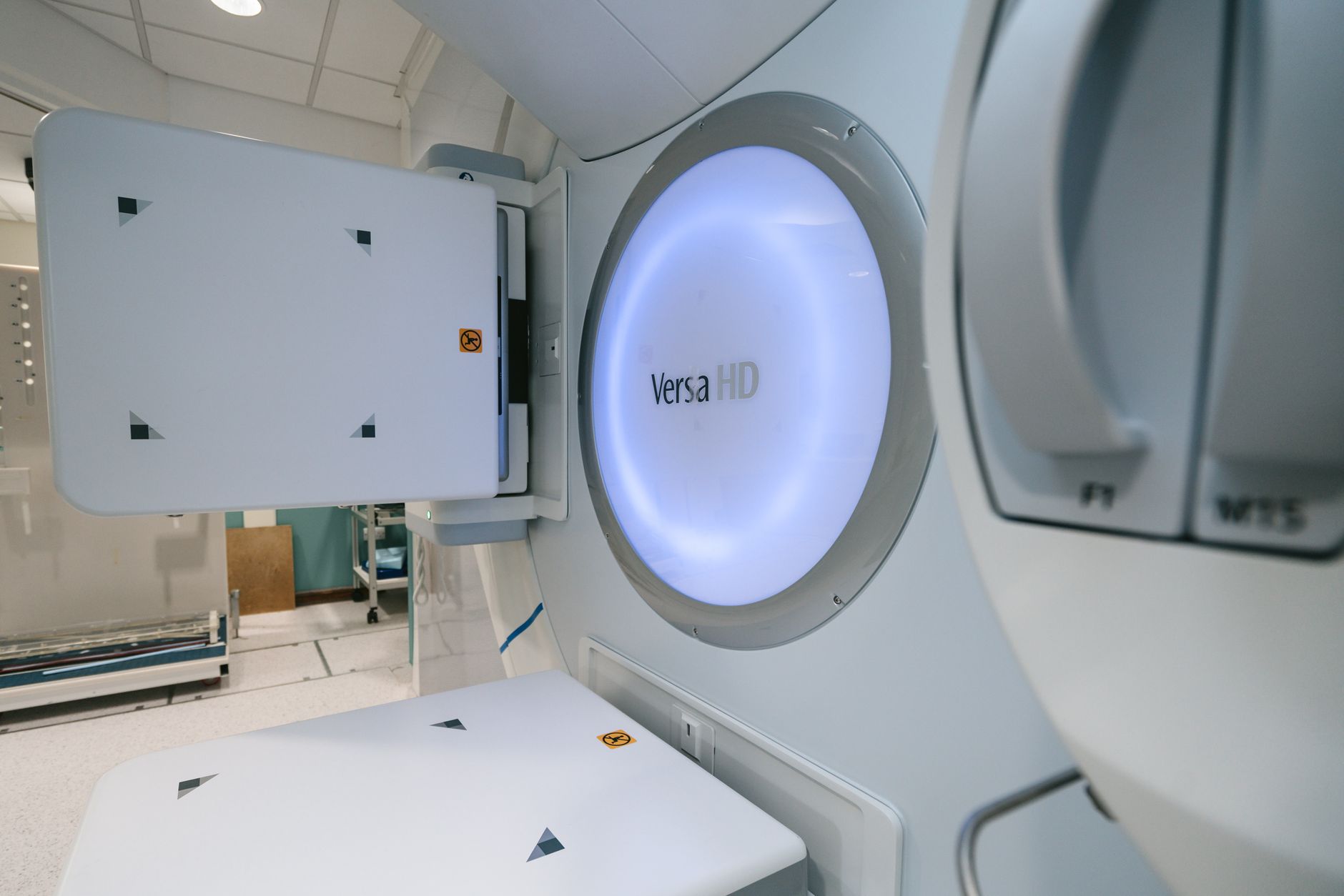
Advocate’s expansion isn’t about buying a better linear accelerator. It’s about stitching those fragmented workflows into something that resembles a continuous care episode. The technology they’re layering in — real-time treatment response analytics, adaptive radiotherapy planning fed by daily imaging, a unified dashboard that actually shows the whole multidisciplinary team the same patient at the same time — attacks the operational debt that kills outcomes more than biology does.
What “Advanced Cancer Care Technology” Actually Means Here
Strip the marketing language and the investment breaks into three concrete layers:
- Adaptive radiotherapy — Daily cone-beam CT feeds into the planning system, letting physicists re-optimize dose distribution while the patient’s still on the table. Anatomy shifts. Bladders fill. Tumors shrink. The old model planned once, treated 30 times. This model plans 30 times.
- Response-adaptive systemic therapy — Circulating tumor DNA draws, cytokine panels, and imaging biomarkers feed a recommendation engine that flags regimen changes before the next cycle. Not “precision medicine” as a buzzword. Precision medicine as a weekly operational rhythm.
- Unified coordination layer — A single longitudinal view across radiation, medical, surgical, palliative, and survivorship teams. Shared decision logs. Versioned care plans. Automatic trial matching that doesn’t require a research coordinator to manually screen every patient.
None of this is sci-fi. Individual pieces exist at MD Anderson, at Dana-Farber, at a handful of NCI-designated centers. What’s different is deploying them as an integrated stack at a community-anchored system like Advocate — where most patients actually get treated — instead of hoarding them at academic flagships.
Why Mesa’s Endorsement Carries Weight
Mesa doesn’t need another board seat. He’s been vocal about health tech’s graveyard of pilot projects that never scaled. When he says this expansion “models what scalable, learning oncology infrastructure looks like,” he’s not praising the gear. He’s praising the architecture decisions that make the gear usable at volume.
Three signals stand out:
- They’re not building custom AI models. They’re integrating validated, FDA-cleared algorithms into clinical workflows with human-in-the-loop checkpoints. Boring. Correct.
- The data layer is FHIR-native from day one. Not “we’ll map it later.” That means when the next biomarker assay or imaging modality arrives, it plugs in, doesn’t require a six-month integration project.
- They’re measuring cycle time — referral to first treatment, plan change to execution, toxicity detection to intervention — not just adoption metrics. That’s how you know they’re serious about operations, not demos.
The Real Benchmark: Can This Survive Reimbursement Pressure?
Here’s where most advanced oncology platforms die. They work beautifully in a grant-funded pilot with dedicated analysts. Then the grant ends, the analysts leave, and the attending physicians revert to phone calls and sticky notes because the system adds 15 minutes per patient.
Advocate’s model has to survive Medicare’s Oncology Care Model, commercial prior-auth friction, and the reality that a community oncologist sees 25 patients a day. If the adaptive radiotherapy re-plan takes 40 minutes of physicist time, it doesn’t scale. If the systemic therapy recommendation engine generates three alerts per patient per cycle and two are noise, clinicians silence it.
Mesa’s praise suggests Advocate has done the unglamorous work: time-motion studies on each workflow, hard caps on added clinician minutes, automated suppression of low-specificity alerts. The technology isn’t the advance. The operational discipline is.
What This Means for the Rest of the Market
Vendors will pitch “the Advocate stack” to every mid-size health system by Q3. Most will sell the modules without the integration discipline. They’ll sell the adaptive radiotherapy planner without the daily imaging pipeline. They’ll sell the recommendation engine without the alert-tuning feedback loop that took Advocate 18 months to calibrate.
Systems buying the brochure will get dashboards. Systems copying the architecture will get cycle-time reductions.
The divide isn’t technology access. It’s whether leadership treats integration as a capital project with a go-live date, or as a permanent operational capability with a dedicated product team. Mesa’s betting on the latter. History says he’s right to.
Cancer care’s digital transformation isn’t a milestone. It’s a maintenance burden. Advocate’s expansion matters because they’re staffing for the maintenance.
Source: original report