PaXini’s Billion-RMB Bet: Tactile Sensing Finally Gets Its Moment
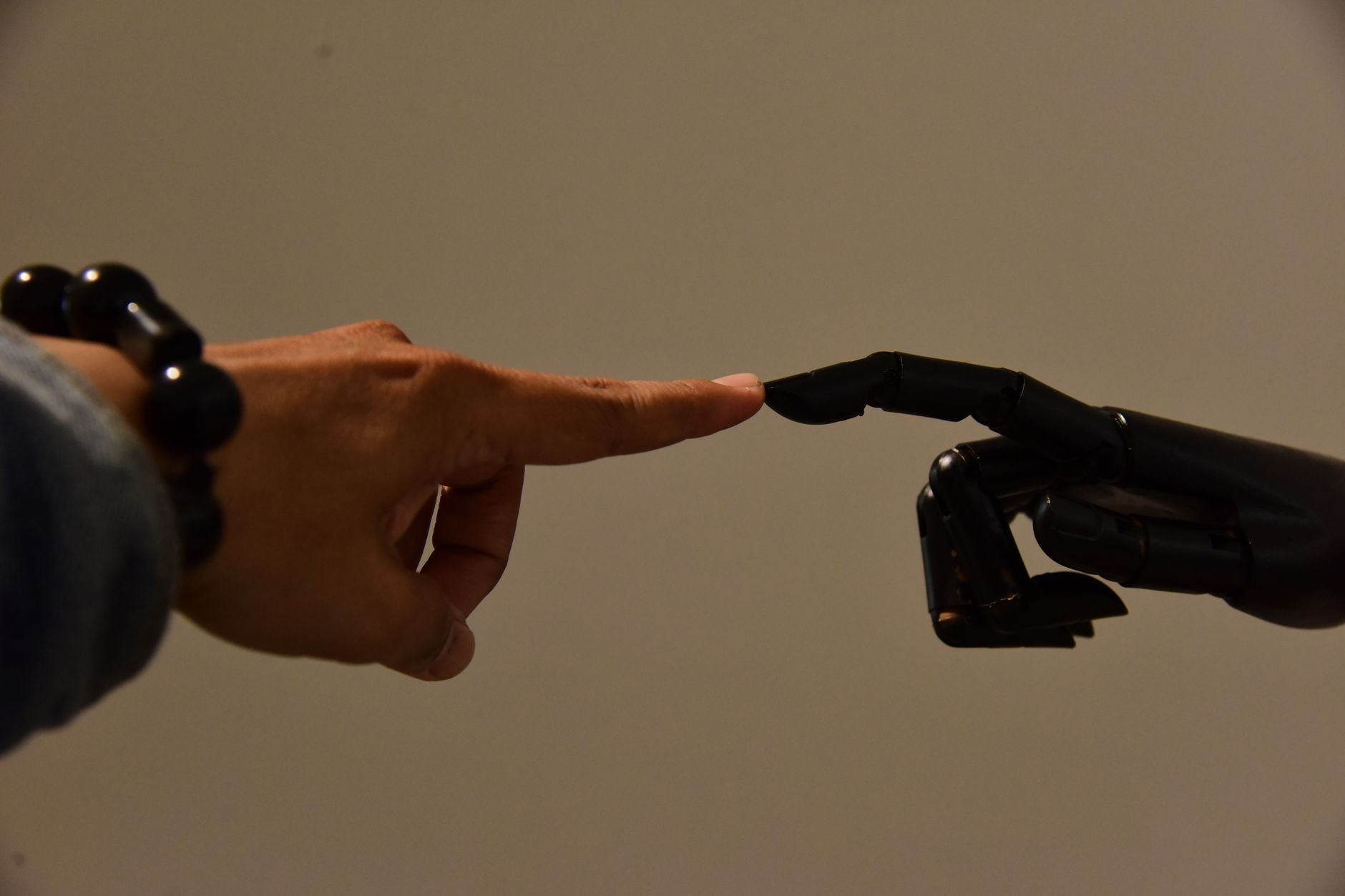
One billion RMB. Roughly $140 million. That’s what PaXini just closed to scale tactile-sensing technology for embodied AI. The number matters less than the signal: investors are finally putting serious capital behind the idea that robots need to feel, not just see.

Why Touch Changes Everything
Computer vision has eaten the last decade. Cameras are cheap, datasets are abundant, and convolutional networks matured fast. But vision alone hits a wall the moment a robot tries to insert a USB-C cable, peel a banana, or hand a scalpel to a surgeon without crushing it. You don’t solve that with more pixels. You solve it with force feedback, slip detection, temperature gradients — the whole tactile vocabulary humans use without thinking.
PaXini’s approach skirts the usual academic trap: they’re not publishing papers on novel sensor arrays. They’re shipping skin. Their flagship sensor layer integrates piezoresistive elements with thermal and shear detectors in a form factor thin enough to wrap a finger joint. The data pipeline fuses those streams at 1 kHz into a latent space their manipulation policies consume directly. No hand-crafted features. No separate perception stack. The policy learns what pressure means by trial and error in simulation, then transfers.
The China Factor
This raise happened in Shenzhen, not Silicon Valley. That’s not incidental. China’s manufacturing density lets PaXini iterate sensor fabrication weekly instead of quarterly. They tape a new batch onto a robot hand Friday, collect 50,000 contact episodes over the weekend, retrain Monday. Western labs wait for cleanroom slots. Speed compounds.
The investor roster tells the same story: Shenzhen Capital Group led, joined by Lenovo Capital and a clutch of strategic LPs from the Pearl River Delta electronics supply chain. These aren’t financial tourists. They need tactile yield rates on assembly lines now — connector seating, gasket placement, micro-solder inspection. PaXini sells them a retrofit kit: slip the sensor sleeve onto existing six-axis arms, push an OTA update, and the line starts rejecting parts that “look” fine but feel wrong.
What the Money Actually Buys
- Volume sensor production — moving from cleanroom batches to roll-to-roll printing on polyimide.
- A simulation farm: 2,000 GPU-hours daily training manipulation policies across 10,000 procedurally generated tasks.
- Deployment engineers embedded at three contract manufacturers. Not demos. Production shifts.
Notice what’s missing: no humanoid platform, no foundation model hype, no “general-purpose” hand-waving. PaXini sells tactile intelligence as a middleware layer. Bolt it onto Fanuc, ABB, or a no-name Chinese arm. The business model is B2B SaaS with a hardware dongle. That’s refreshingly boring.
The Gap Nobody Talks About
Tactile data is messy. Shear signals alias with normal force. Temperature drifts with ambient. Cabling adds noise. Most academic benchmarks ignore this because they test on pristine lab fixtures. PaXini’s moat is a calibration pipeline that runs nightly on each deployed sensor, using the robot’s own idle motions to re-estimate bias matrices. They treat the sensor as a drifting instrument, not a static transducer. That operational maturity is worth more than any novel polymer.
Where This Goes Next
If PaXini hits their 18-month milestones — sub-millinewton resolution at 1 kHz, 10,000-hour MTBF on the sensor sleeve, and a manipulation success rate north of 99.2% on mixed connector seating — they become the default tactile layer for Chinese automation. From there, two paths open. They either get acquired by a Fanuc or a Siemens who needs the data flywheel, or they raise a Series B at unicorn valuation to expand into mobile manipulation: warehouse picking, food prep, elder care. The second path is harder but stickier.
Either way, the era of “vision-only” embodied AI just got a deadline. Robots that can’t feel are about to look as dated as phones without touchscreens.
Source: original report