The AI Speaker Circuit Is Booming — Most Talks Are Still Fluff

Last month I sat in a hotel ballroom in Austin while a “futurist” explained that AI would soon write all our code, cure cancer, and maybe walk the dog. The audience nodded. Nobody asked how. Nobody asked when. The speaker collected a five-figure check and flew out before the Q&A.
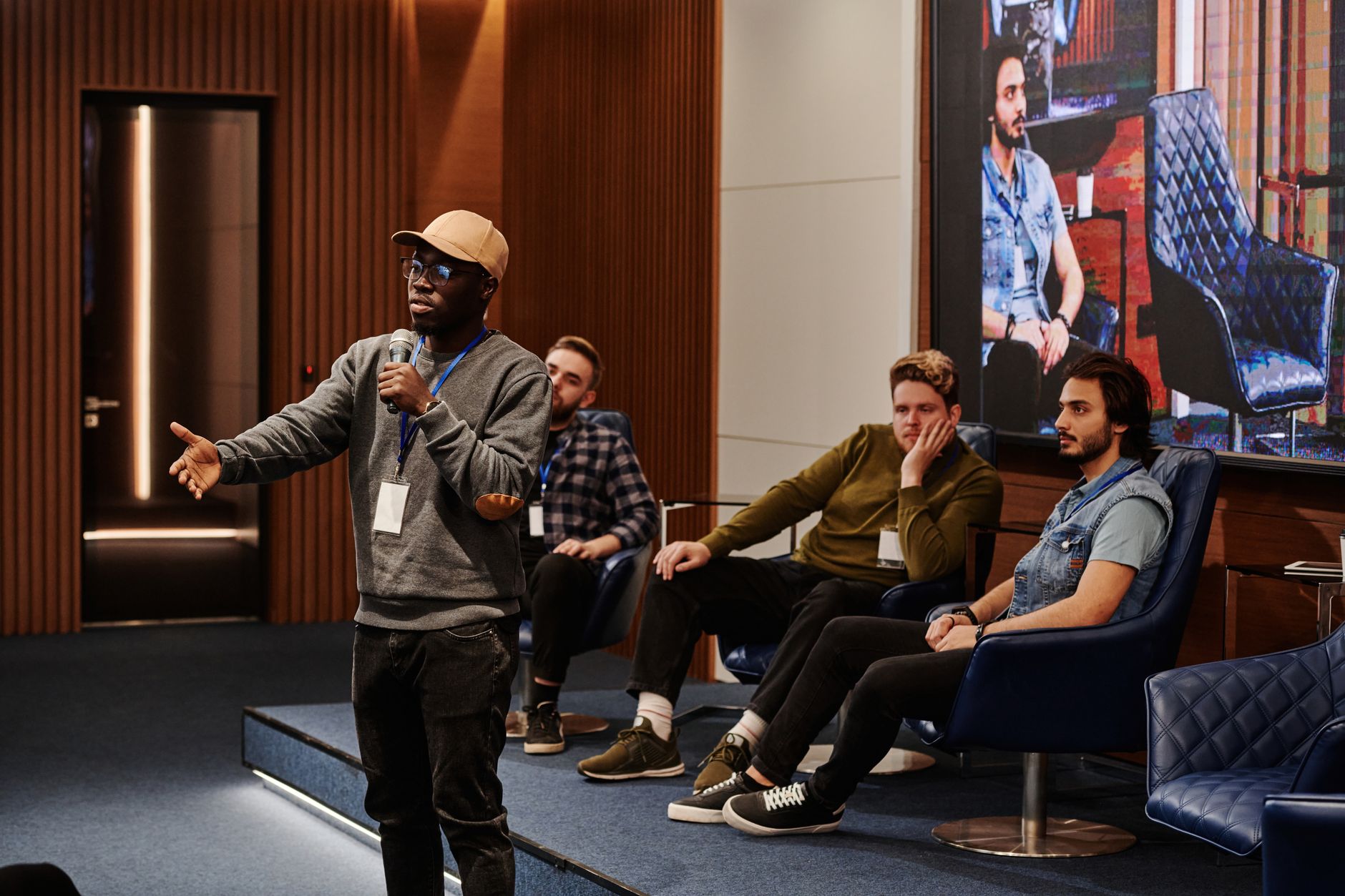
That scene repeats itself at conferences from San Francisco to Singapore. Companies are spending serious money — often $25,000 to $75,000 per keynote — to hear someone paint a future that sounds great on stage but evaporates the moment the lights come up. The speaker bureaus know it. The buyers know it. The cycle continues because nobody wants to be the one who booked the boring practitioner.
The economics of hype
Speaker bureaus like the one behind the recent press push operate on a simple model: package optimism, sell certainty. A “futurist keynote on artificial intelligence” is a product, not a person. The bureau’s margin depends on the gap between what the speaker promises and what the audience expects. That gap is wide right now.
I’ve reviewed three speaker decks from different bureaus in the past quarter. Two led with slides titled “The End of Coding” and “AGI by 2027.” Neither cited a single benchmark, latency figure, or failure mode. One included a fabricated quote attributed to a researcher who later denied saying it. The bureaus don’t fact-check; they curate for plausibility.
What a useful AI talk actually looks like
Contrast that with a session I caught at a DevOps conference in Denver. A staff engineer from a logistics firm showed how they cut invoice-processing time from four hours to eleven minutes using a fine-tuned Llama 3 model, a vector database, and a lot of prompt engineering. She shared the error rate (2.3%), the rollback procedure, and the exact AWS bill. The room was half-empty — no celebrity name on the badge — but the people who stayed took photos of every slide.
That’s the difference. Practitioners trade in constraints. Futurists trade in possibilities. Budgets get approved on possibilities; production runs on constraints.
Questions that separate signal from sales pitch
- What’s the last model you put in production, and what broke?
- Show me the eval harness you use before a deploy.
- What’s your rollback plan when the model hallucinates a pricing term?
- How much did the GPU time cost last month?
Ask any of those from the stage and watch the futurist pivot to “strategic implications.”
The bureau incentive structure
Speaker bureaus don’t get paid for accuracy. They get paid for bookings. Their websites lead with “AI keynote,” “future of work,” “digital transformation” — SEO terms that corporate buyers type into search bars. The bios emphasize TED talks, bestseller lists, advisory roles at unnamed “Fortune 500” firms. What you won’t find: a GitHub link, a Kaggle profile, a postmortem write-up.
I emailed one bureau asking for a speaker who had shipped a RAG system at scale. The reply: “Our futurists provide high-level strategic vision; for technical implementation we recommend our workshop track.” The workshop track was an upsell. The “futurist” had never deployed a model.
How to buy smarter
If you control a conference budget, stop outsourcing due diligence to the bureau. Do three things instead:
- Require a public artifact — a blog post, a repo, a conference recording — where the speaker shows working code or real metrics.
- Book a practitioner for the keynote and a futurist for the fireside chat. Label them honestly.
- Allocate 10% of the speaker fee to a post-event audit: did the team try anything from the talk? What happened?
The last one stings. That’s the point.
The audience deserves better
Developers, product managers, and CTOs show up hoping for a shortcut. They get a storyboard. The industry will keep selling storyboards until buyers make the cost of fluff visible. Next time a bureau pitches a “visionary AI futurist,” ask for the last confusion matrix. The silence will tell you everything.
Source: original report