Augmodo’s $21M Raise Signals Spatial AI’s Pivot Beyond Retail
Retail was supposed to be the beachhead for spatial AI — endless shelves, planogram compliance, out-of-stock alerts, all captured by ceiling-mounted cameras and turned into structured data. The pitch decks wrote themselves. Then the pilots started. Grocers loved the demos but balked at the hardware install. Big-box chains ran six-month bake-offs and still couldn’t sign a master services agreement. Margins stayed razor-thin because every deployment is a custom integration project, not a software license. Augmodo just raised $21 million to admit what the rest of the category has been whispering: retail alone won’t build a venture-scale company.

The Retail Trap
Spatial AI — the blend of computer vision, sensor fusion, and 3D scene understanding — looks magical in a controlled demo. Point a camera at a gondola endcap, get real-time SKU-level inventory, feed the replenishment engine, profit. Reality is messier. Lighting shifts. Seasonal planograms rotate weekly. Store associates move the cameras when they’re in the way. IT departments demand on-prem inference because bandwidth is expensive and policy forbids video egress. Each location becomes a snowflake deployment, and snowflakes don’t scale.
Augmodo’s own case studies tell the story. They’ve deployed in hundreds of stores for a top-10 U.S. grocer. The tech works: shrink reduction, on-shelf availability lifts, labor hours redirected. But the contract value per store caps out around the low five figures annually. Multiply by a few thousand stores and you’re looking at a $50M ARR ceiling — if you win every single banner. That’s not a unicorn trajectory. That’s a services shop with expensive R&D.
What Spatial AI Actually Does
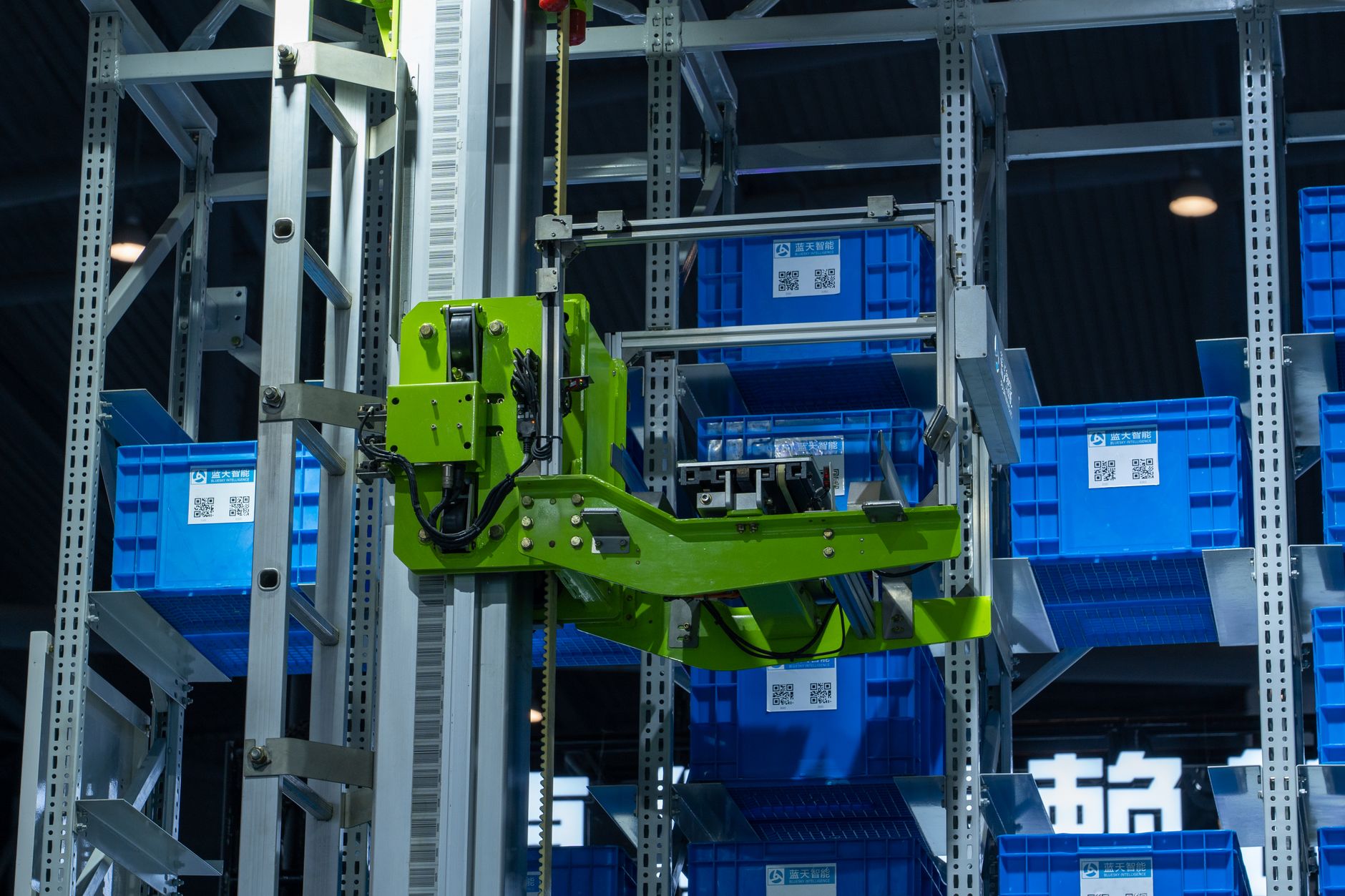
Strip away the vertical and the core capability is spatial reasoning: given a stream of RGB-D or multi-view RGB, build a persistent 3D semantic map of objects, people, and equipment, then track state changes over time. That’s not a retail skill. That’s a physical-world indexing skill. The same pipeline that detects a missing box of cereal on shelf three can detect a misplaced tote in a fulfillment center, a missing tool on a shadow board in a maintenance hangar, or an unauthorized pallet blocking a fire lane in a cold-storage warehouse.
The difference is the buyer. Retail buyers are category managers measured on comp sales and labor hours. Industrial buyers are operations VPs measured on throughput, safety incidents, and capital efficiency. They write bigger checks faster because the cost of a single missed pallet or a single ladder fall dwarfs the cost of a stock-out on aisle four. Augmodo’s new funding memo explicitly names logistics, manufacturing, and healthcare as the next verticals. That’s not pivot theater — that’s following the money to where the physics of the problem matches the economics of the sale.
Why the Pivot Matters
The spatial AI category is crowded. Standard Cognition, Focal Systems, Simbeez, and a half-dozen stealth teams all started in retail. Most will stay there and become feature arms for the big planogram platforms (Relex, NielsenIQ, Symphony). The ones that escape will do it by verticalizing the stack: same perception backbone, different decision layer, different contract vehicle. Augmodo’s Series A, led by a strategic industrial LP alongside traditional venture, signals they’re building that verticalized stack now — not after the retail cash runs dry.
Technically, the shift demands three things. First, sensor agnosticism: warehouses run lidar, thermal, and UWB alongside cameras; hospitals run ceiling-mounted depth and BLE. The perception core must ingest heterogeneous streams without re-architecting per site. Second, simulation-first training: you can’t afford three-month labeling cycles for every new SKU or tote type. The team has invested heavily in synthetic data pipelines that generate physically plausible scenes from CAD layouts and physics engines. Third, edge fleet management: thousands of inference nodes across distributed sites, updated over-the-air, monitored for model drift, with zero-touch provisioning. That’s a DevOps problem masquerading as an AI problem.
The Hard Part Isn’t the Tech
Computer vision researchers love to argue [email protected] on SKU-110K. Operators care about mean time to actionable alert and false-positive fatigue. In a 1.2M-square-foot fulfillment center, a 2% false-positive rate on obstruction detection means the safety team ignores the dashboard by week two. Augmodo’s bet is that their retail scar tissue — years of tuning alert thresholds against associate pushback — translates to industrial alert hygiene. Maybe. But the sales motion changes entirely: you’re not selling to a merchandising VP who runs a pilot; you’re selling to a COO who writes a multi-site PO after a single paid proof-of-value in one building. The cycle compresses from 18 months to 6. The ACV jumps from $30K/store to $500K/facility. The churn drops because ripping out ceiling infrastructure is a capital project, not a vendor swap.
There’s risk. Industrial sites are unionized, regulated, and paranoid about video. Healthcare adds HIPAA and patient consent. Each vertical needs its own compliance wrapper, its own integration partners (WMS, MES, EHR), its own reference architectures. Augmodo’s $21M buys the headcount to build those wrappers in parallel rather than sequentially. That’s the only way to prove the platform thesis before the next fundraise.
Watch the customer logos on the website six months from now. If they swap a regional grocer for a 3PL giant and a health system, the pivot is real. If they add a second grocer and a convenience-store chain, they’re just fundraising for a better retail multiple. The money says they know the difference. The market will find out if the product does.
Source: original report