OpenAI’s Jalapeño Chip Is a Strategic Bet, Not a Silicon Revolution
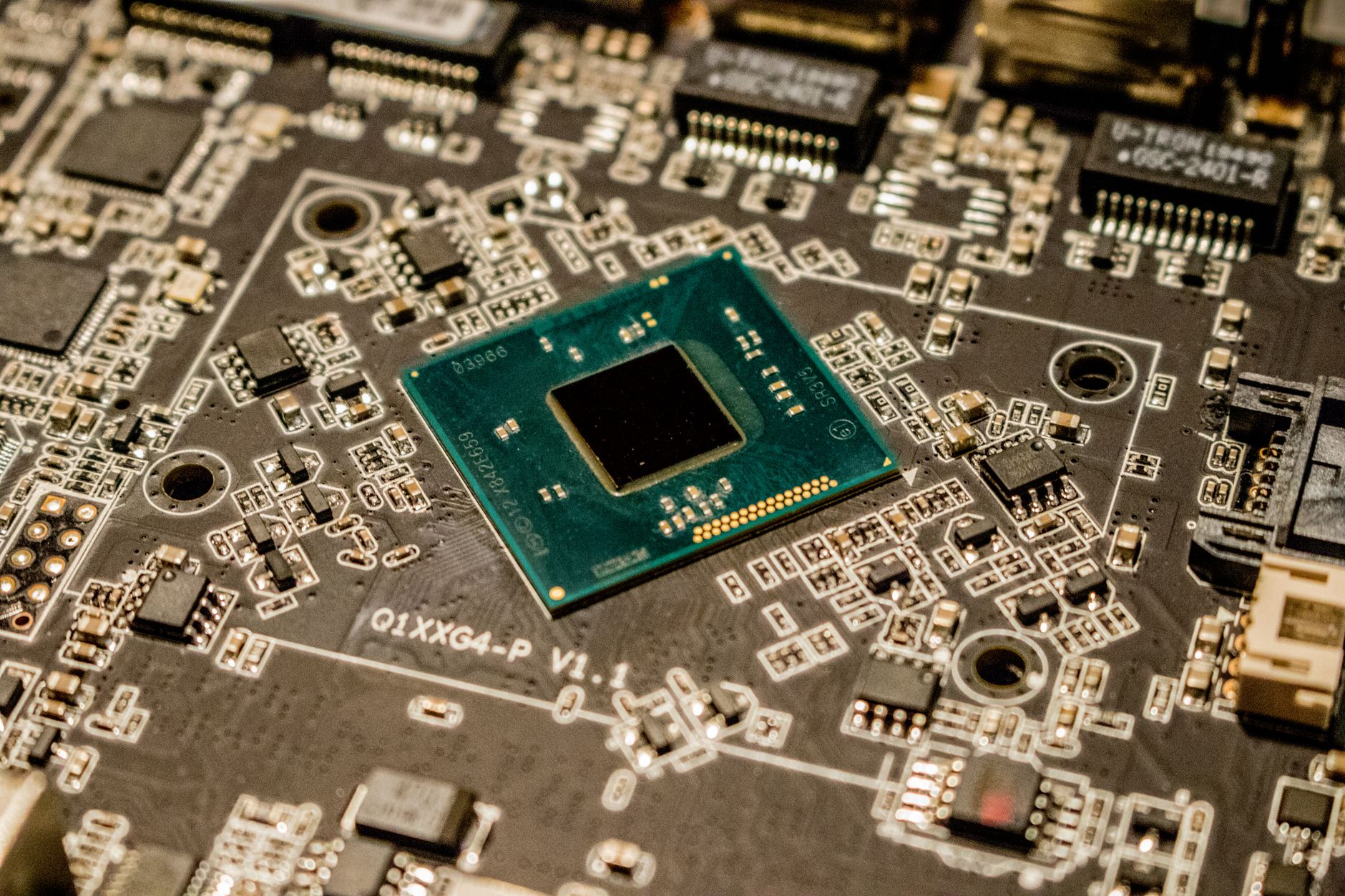
OpenAI just announced its first custom AI chip, a processor codenamed “Jalapeño” and built in partnership with semiconductor giant Broadcom. On the surface, this looks like a classic tech giant move to control its own hardware destiny, following the path blazed by Google’s TPUs and Amazon’s Trainium. But the real story isn’t about raw performance claims or a secret weapon against NVIDIA. It’s a calculated, pragmatic shift in how a company burning through capital on inference needs to operate at a massive scale.

The chip is designed specifically for inference—the process of running trained AI models to generate responses, not training them from scratch. This distinction is critical. For OpenAI, with millions of users hammering services like ChatGPT and its API every second, the efficiency of inference directly impacts cost and speed. Every millisecond shaved off a response time or every watt of power saved at their data centers translates to real savings. A custom chip allows them to tune the silicon to their specific software stack and workload patterns, potentially squeezing out efficiencies a one-size-fits-all GPU simply can’t match.
Why Broadcom, and Why Now?
The partnership with Broadcom makes perfect sense. While NVIDIA dominates the GPU market for AI training, Broadcom is a powerhouse in custom ASIC (Application-Specific Integrated Circuit) design and network connectivity. They’re the company many large tech firms turn to when they need a specialized piece of silicon that doesn’t exist off the shelf. Broadcom has the engineering muscle to design a chip and the manufacturing relationships to get it produced. For OpenAI, this is about accessing deep semiconductor expertise without building a multi-billion-dollar chip design team from zero.
The timing is also telling. The AI industry is hitting an inference bottleneck. Training massive models gets all the headlines, but deploying them to serve the public is the ongoing, revenue-generating challenge. The demand for low-latency, high-throughput inference is exploding. Custom silicon is one of the few levers left to pull at this scale to manage costs and performance. This move signals that OpenAI is thinking beyond just having the biggest model; it’s engineering for sustainable, large-scale deployment.
It’s Not a NVIDIA Killer. It’s an Inference Specialist.
Let’s be clear: the Jalapeño chip is not designed to compete with NVIDIA’s H100 or Blackwell GPUs for training cutting-edge foundation models. That remains the domain of massively parallel, general-purpose GPU clusters. Instead, this is a specialist. It’s optimized for the specific mathematical operations and data flow patterns that dominate OpenAI’s inference workload. Think of it like the difference between a Swiss Army knife and a precision surgical tool. You need the knife for a wide range of tasks, but for one specific, repeated procedure, the specialized tool is faster, more efficient, and ultimately cheaper to operate.
The benefits are concrete. A custom chip can integrate specialized memory hierarchies, data movement engines, and even software compilers tailored for PyTorch or whatever frameworks OpenAI uses internally. This vertical integration—from silicon to software—can eliminate the overhead and compromise inherent in using a general-purpose processor. For end-users, this could mean subtly faster response times or, more likely behind the scenes, a reduction in the cost per query, helping to keep subscription fees from spiraling further.
The Bigger Picture: AI’s Hardware Recalibration
OpenAI’s move is part of a broader industry trend. Hyperscalers like Google, Amazon, and Microsoft are all investing heavily in custom silicon to reduce their reliance on a single vendor like NVIDIA and to optimize for their specific cloud AI workloads. This isn’t about replacing NVIDIA overnight; it’s about gaining leverage, reducing supply chain risk, and achieving finer control over their infrastructure stack. It acknowledges that as AI models become commodities, the competitive edge will shift toward the efficiency and cost-effectiveness of the systems that run them.
For the rest of us building on AI, this is a signpost. The future of AI infrastructure isn’t just about model size or benchmark scores. It’s about the full stack—the elegant integration of model, software, and custom-designed hardware to deliver intelligence at scale. OpenAI isn’t just a software company anymore. It’s becoming a full-stack AI engineering shop, and the Jalapeño chip is its first foray into the silicon layer of that stack.
Source: Russell Brandom