The Ex-Google CEO’s Robot Play Isn’t About replacing Humans, It’s About the Nuts and Bolts
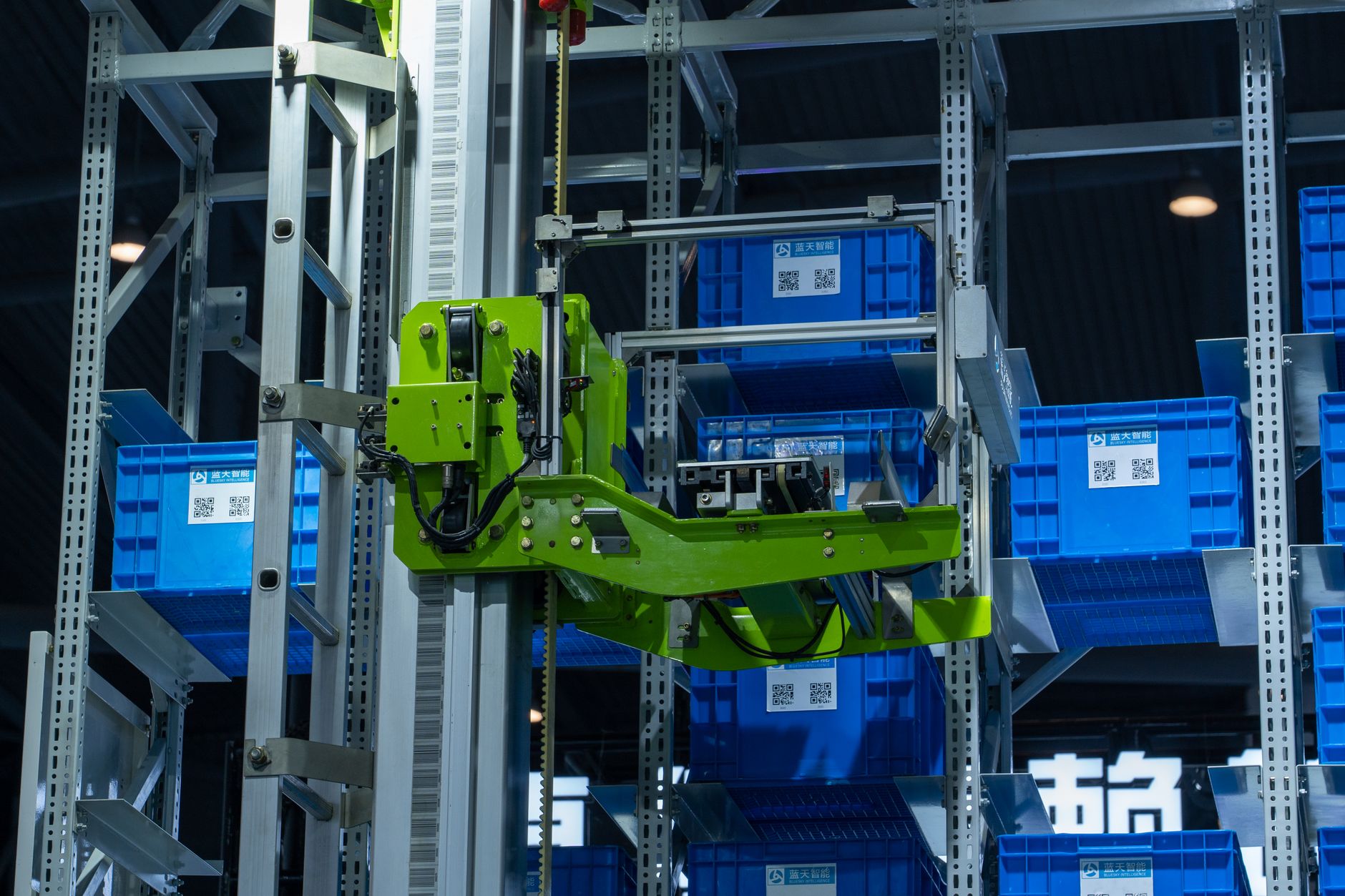
Forget the sci-fi dreams of androids walking our dogs. The latest major play in industrial robotics, backed by former Google chief Eric Schmidt and partnering with manufacturing titan LG, is focused on something far more mundane—and arguably more important. The new startup, Covariant, isn’t chasing headlines with humanoid designs. Its debut robot is built for one of the unglamorous backbones of modern logistics: sorting packages. It’s a deliberate, strategic move that reveals where the real, near-term value of automation lies.

While consumer-facing AI grabs the spotlight, the quiet revolution is happening in warehouses and distribution centers. The problem Covariant tackles is brutally simple: piles of randomly oriented packages coming off a truck or conveyor belt. For a human, grabbing a specific box from a jumbled heap is easy. For a traditional robot, it’s a nightmare of computation and mechanical guesswork. Covariant’s system uses advanced AI vision and a flexible gripper to perceive and handle this chaos, turning unstructured environments into something a machine can reliably navigate.
The Schmidt Bet: Seeing the Boring Opportunity
Eric Schmidt’s involvement is telling. After leading Google through its formative years, he understands that transformative technology often hides in plain sight, within massive, inefficient industries. The global logistics and manufacturing sectors are trillions of dollars in size, yet riddled with manual, repetitive tasks. Schmidt isn’t funding a robot to impress at a tech conference; he’s investing in a solution that can slot into existing workflows at companies like LG and start delivering ROI. This is the “pick and place” problem—a foundational challenge in robotics that, once solved, unlocks automation in countless other areas from electronics assembly to food packaging.
The partnership with LG is equally strategic. LG isn’t just a financial backer; it’s a potential manufacturing partner and a first customer. This provides Covariant with immediate scale, real-world testing grounds, and validation. For LG, it’s a hedge against rising labor costs and a way to make its own vast manufacturing operations more resilient. This symbiotic relationship between a Silicon Valley AI startup and a Korean industrial conglomerate is a template for how deep tech gets deployed outside the software bubble.
Why This Focus Matters More Than Humanoid Robots
The hype cycle loves images of robots that look like us. But the immediate, practical value of robotics is in augmenting, not replicating, human dexterity in controlled environments. A warehouse robot that can identify and sort 1,000 packages an hour without fatigue, error, or the need for a break solves a concrete business pain point. It’s measurable. It’s scalable. It doesn’t require a breakthrough in artificial general intelligence—just highly applied, specialized AI.
- Handling Variability: The core innovation is dealing with the “unstructured.” Most industrial robots succeed by working in perfectly predictable settings. Covariant’s tech introduces flexibility.
- Data Flywheel: Every package the robot handles generates data, improving its vision algorithms and grip strategies. This creates a powerful feedback loop that hardens the system over time.
- Incremental Integration: You don’t replace an entire warehouse overnight. Robots that can be dropped into specific, high-friction points in an existing line are far easier to sell and adopt.
This approach contrasts sharply with more ambitious, full-system automation projects that promise to redo entire factories. Those are capital-intensive, risky, and slow. Covariant’s model is about surgical, high-impact deployment. It’s the difference between building a whole new highway system and fixing the worst bottleneck on the existing road.
The Real Test: Beyond the Demo
The real challenge isn’t building a compelling demonstration video. It’s proving reliability, uptime, and total cost of ownership in the sweaty, dusty, 24/7 reality of a logistics hub. Can the robot handle a damaged box? Can it adapt if the lighting changes? How quickly can it be retrained for a new type of package? The partnership with LG provides the perfect testing ground to answer these gritty operational questions. Success here would send a powerful signal to the entire manufacturing sector.
The debut of Covariant’s robot is less about a single machine and more about a validated thesis: the path to broader automation runs through solving specific, repetitive, and economically vital tasks. Schmidt’s bet isn’t on a robot that thinks like a human, but on one that can reliably perform a human job. That’s the less glamorous, but far more certain, foundation for the future of work.
Source: original report